Overview of the Mumbai Centre for International Arbitration (MCIA) and Its Establishment
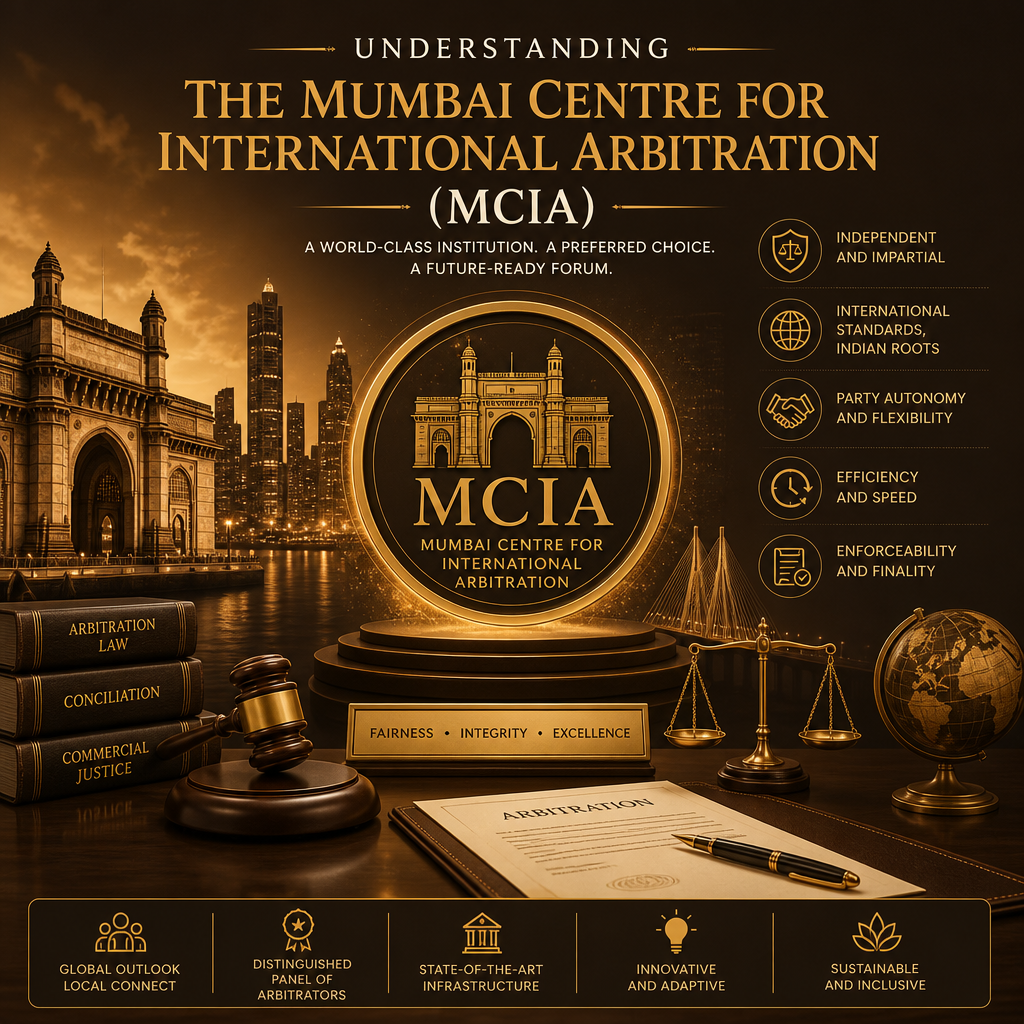
The Mumbai Centre for International Arbitration (MCIA) stands as a beacon of excellence in the realm of arbitration in India, offering a neutral and efficient platform for resolving both international and domestic disputes. Established in 2016, the MCIA was conceived with the vision of providing a world-class arbitration facility in India, thereby reducing the reliance on foreign arbitration centers such as those in Singapore and London.
Genesis and Purpose
The MCIA was established through a collaborative effort involving the Government of Maharashtra and prominent Indian and international arbitration practitioners. The aim was to create a robust infrastructure that would cater to the growing demand for arbitration services in India, a nation rapidly integrating into the global economy. The center is strategically located in Mumbai, the financial capital of India, which enhances its accessibility and relevance for commercial entities.
Legal Framework and Governance
The MCIA operates under the Arbitration and Conciliation Act, 1996, which serves as the cornerstone of arbitration law in India. This Act, amended several times to align with international best practices, provides the statutory framework within which the MCIA functions. The MCIA Rules, meticulously drafted to incorporate international standards, govern the procedural aspects of arbitration conducted at the center, ensuring fairness, efficiency, and transparency.
Facilities and Services
The MCIA boasts state-of-the-art facilities, including technologically advanced hearing rooms, breakout rooms, and administrative support services. These facilities are designed to accommodate complex arbitration proceedings, providing a conducive environment for parties and arbitrators. The center offers a range of services, including the appointment of arbitrators, case management, and logistical support, ensuring that proceedings are conducted smoothly and efficiently.
Notable Personalities and Contributions
The MCIA's establishment and operations have been supported by some of India's most distinguished legal minds. Senior advocates such as Harish Salve KC, known for his expertise in international commercial arbitration, and Gopal Subramanium, a former Solicitor General with a strong background in commercial and institutional arbitration, have been instrumental in promoting the center's objectives. Their involvement underscores the MCIA's commitment to upholding the highest standards of arbitration practice.
Impact and Recognition
Since its inception, the MCIA has gained recognition as a leading arbitration institution, attracting high-profile cases and clients from around the world. Its establishment has significantly contributed to positioning India as a viable arbitration hub, providing a cost-effective and geographically convenient alternative to traditional arbitration centers. The MCIA's success is reflected in its growing caseload and positive feedback from users, who appreciate the center's commitment to excellence and innovation.
For those seeking to understand the intricacies of arbitration in India or require assistance with arbitration-related matters, consult an expert advocate on AMA Connect to navigate the complexities of the arbitration process effectively.
Key Features and Procedures of MCIA: A Comprehensive Guide
Introduction to MCIA
The Mumbai Centre for International Arbitration (MCIA) stands as a beacon of excellence in the realm of arbitration in India. Established to provide a neutral and efficient forum for resolving international and domestic disputes, the MCIA is pivotal in enhancing India's position as a preferred arbitration hub. Governed by the Arbitration and Conciliation Act, 1996, the MCIA operates with a set of rules designed to streamline the arbitration process.
Key Features of MCIA
Neutral Venue: The MCIA offers a neutral venue for parties from different jurisdictions, ensuring impartiality and fairness in proceedings.
Modern Infrastructure: Equipped with state-of-the-art facilities, the MCIA provides an environment conducive to effective dispute resolution.
Expert Panel of Arbitrators: The MCIA boasts a panel of eminent arbitrators, including renowned figures like Harish Salve KC and Mukul Rohatgi, who bring a wealth of experience in international commercial arbitration.
Cost-Effectiveness: The MCIA offers competitive fee structures, making arbitration accessible to a wider range of parties.
Flexibility in Procedures: Parties have the autonomy to tailor proceedings according to their needs, enhancing the efficiency of the arbitration process.
Procedures at MCIA
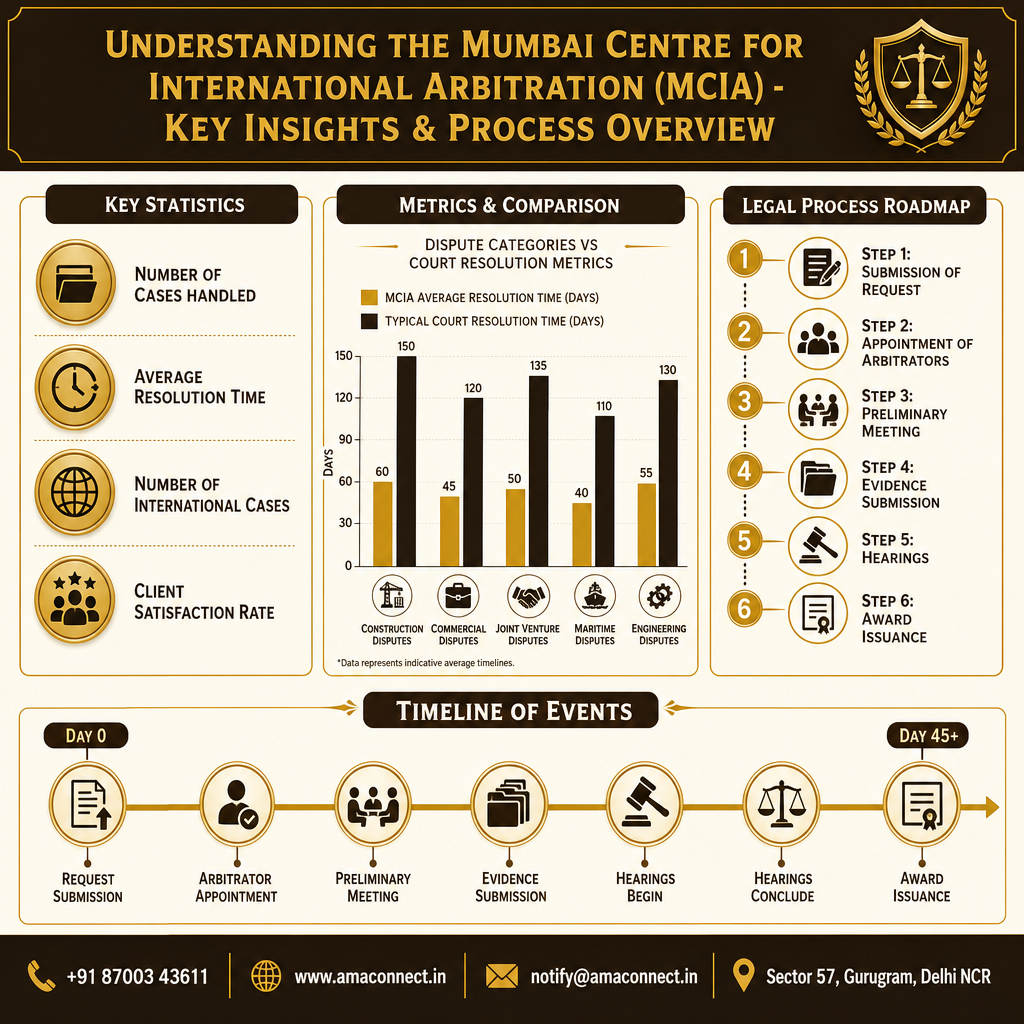
The MCIA follows a structured procedure, ensuring that disputes are resolved in a timely and effective manner. The process is governed by the MCIA Rules, which align with international best practices.
Initiating Arbitration
Filing a Request: The arbitration process at the MCIA begins with the filing of a request for arbitration, accompanied by relevant documents and the payment of the registration fee.
Appointment of Arbitrators: Parties can agree on the appointment of arbitrators, or the MCIA can assist in appointing a suitable panel from its roster.
Conduct of Arbitration
Preliminary Meetings: Initial meetings are conducted to establish timelines and procedural rules, ensuring clarity and mutual agreement on the arbitration process.
Submission of Statements: Parties submit their statements of claim and defense, along with supporting evidence, to the tribunal.
Hearings: Hearings may be conducted in person or virtually, providing flexibility to accommodate the needs of the parties involved.
Award and Enforcement
Issuance of Award: The arbitral tribunal issues a reasoned award within the stipulated time frame, binding on the parties.
Enforcement: Awards rendered by the MCIA are enforceable under the Arbitration and Conciliation Act, 1996, facilitating swift enforcement through Indian courts.
"The MCIA's commitment to neutrality and efficiency has positioned it as a leading institution for arbitration in India, fostering confidence among international and domestic parties alike."
For parties seeking a reliable forum for dispute resolution, the MCIA offers a comprehensive framework that balances cost, efficiency, and expertise. To further explore the intricacies of arbitration or to schedule a confidential legal consultation, visit AMA Legal Solutions.
Benefits of Choosing MCIA for Dispute Resolution in India
The Mumbai Centre for International Arbitration (MCIA) stands as a beacon of excellence in the realm of arbitration in India, offering a robust platform for both international and domestic dispute resolution. Established with the vision of providing a neutral, efficient, and cost-effective forum, the MCIA has rapidly gained recognition among global and domestic legal practitioners.
Neutral and Independent Forum
One of the primary advantages of choosing the MCIA is its commitment to neutrality and independence. The institution is not affiliated with any governmental body, ensuring that all arbitral proceedings are conducted without bias. This independence is crucial for parties seeking a fair resolution, particularly in cross-border disputes where impartiality is paramount.
Efficiency and Expertise
The MCIA is renowned for its streamlined procedures that facilitate swift resolutions. The MCIA Rules are designed to minimize delays and reduce procedural complexities, which are often associated with traditional litigation. Moreover, the Centre boasts a panel of eminent arbitrators, including internationally acclaimed figures like Harish Salve KC and Mukul Rohatgi, who bring a wealth of experience in international commercial arbitration.
Cost-Effectiveness
Arbitration at the MCIA is structured to be more cost-effective compared to litigation. The Centre's fee structure is transparent, with no hidden costs, allowing parties to budget effectively for their dispute resolution processes. This financial predictability is a significant advantage for businesses and individuals alike.
Comprehensive Support Services
The MCIA offers a range of support services that enhance the arbitration experience. These include state-of-the-art facilities for hearings, administrative support, and access to a vast repository of legal resources. The Centre's commitment to providing a seamless experience is evident in its attention to detail and client-centric approach.
Location Advantage
Situated in Mumbai, India's financial capital, the MCIA is strategically positioned to serve as a hub for arbitration in the region. Its proximity to major financial institutions and legal firms makes it a convenient choice for parties involved in commercial disputes. Additionally, Mumbai's connectivity to international destinations facilitates the participation of foreign parties and arbitrators.
Recognition and Credibility
The MCIA's growing reputation is bolstered by its adherence to international best practices and its alignment with the Arbitration and Conciliation Act, 1996. The Centre's commitment to maintaining high standards has earned it the trust of the global arbitration community, making it a preferred choice for resolving complex disputes.
"The MCIA is a game-changer in the Indian arbitration landscape, offering a world-class platform that aligns with international standards," - Dr. Abhishek Manu Singhvi, Senior Advocate
For those seeking a reliable and efficient forum for dispute resolution, the MCIA presents a compelling option. Its blend of neutrality, expertise, and cost-effectiveness, coupled with its strategic location, makes it an ideal choice for both international and domestic parties. To learn more about how the MCIA can assist in your specific legal needs, you can schedule a confidential legal consultation with our experts or consult an expert advocate on AMA Connect.
Comparison of MCIA with Other International Arbitration Centres
The Mumbai Centre for International Arbitration (MCIA) is a pivotal institution in India, offering a neutral and efficient platform for resolving both international and domestic disputes. As arbitration becomes a preferred method of dispute resolution, understanding how MCIA compares with other global arbitration centres is crucial for legal professionals and parties involved in arbitration.
Key Features of MCIA
Location: Situated in Mumbai, India's financial capital, MCIA is strategically positioned to handle complex commercial disputes.
Rules: MCIA operates under its own set of rules, which align with the Arbitration and Conciliation Act, 1996, ensuring a streamlined process.
Panel of Arbitrators: MCIA boasts a diverse panel of arbitrators, including eminent legal figures like Harish Salve KC and Mukul Rohatgi, who bring unparalleled expertise in international commercial arbitration.
Facilities: State-of-the-art infrastructure and technology support seamless arbitration proceedings.
Comparison with Other International Arbitration Centres
When comparing MCIA with other renowned arbitration centres such as the Singapore International Arbitration Centre (SIAC), London Court of International Arbitration (LCIA), and the International Chamber of Commerce (ICC), several factors come into play:
Arbitration Centre | Location | Core Strengths | Notable Arbitrators | Accessibility |
|---|
MCIA | Mumbai, India | Domestic and international commercial disputes, cost-effective solutions | Harish Salve KC, Mukul Rohatgi | Accessible through AMA Legal Solutions for legal consultations |
SIAC | Singapore | International commercial arbitration, neutrality, efficiency | Michael Hwang SC, Lucy Reed | Globally accessible, strong Asian presence |
LCIA | London, UK | Complex commercial disputes, confidentiality | Lord Neuberger, Sir Bernard Rix | European focus, global reach |
ICC | Paris, France | Broad international network, comprehensive rules | Alexis Mourre, Yves Derains | Extensive global accessibility |
Advantages of MCIA
MCIA offers several advantages over its international counterparts:
Cost-Effectiveness: MCIA provides a cost-effective alternative, especially beneficial for disputes involving Indian parties.
Local Expertise: With a panel of distinguished Indian arbitrators, MCIA offers deep insights into local commercial practices.
Procedural Flexibility: The MCIA Rules allow for procedural flexibility, accommodating the specific needs of the parties involved.
For those seeking to consult an expert advocate on AMA Connect or explore interviews with senior Indian advocates, MCIA stands as a robust choice for arbitration in the Indian context. Its strategic location, coupled with a strong panel of arbitrators, makes it a formidable option for resolving disputes efficiently and effectively.
Legal Framework Governing MCIA and Its Role in Indian Arbitration
Introduction to the Legal Framework
The Mumbai Centre for International Arbitration (MCIA) operates within the robust legal framework established by the Arbitration and Conciliation Act, 1996. This Act is the cornerstone of arbitration law in India, aligning with the UNCITRAL Model Law on International Commercial Arbitration. The MCIA's rules are meticulously designed to complement this legislative framework, offering a streamlined and efficient process for dispute resolution.
MCIA Rules and Procedures
The MCIA has developed its own set of procedural rules, known as the MCIA Rules, which govern the conduct of arbitration proceedings. These rules are crafted to ensure flexibility, efficiency, and neutrality, catering to both international and domestic parties. Key features include:
Expedited Procedures: For disputes requiring swift resolution, the MCIA offers expedited arbitration, reducing timeframes without compromising fairness.
Appointment of Arbitrators: The MCIA provides a panel of distinguished arbitrators, including eminent personalities like Harish Salve KC and Gopal Subramanium, ensuring expertise in diverse legal fields.
Confidentiality: The MCIA rules emphasize the confidentiality of proceedings, safeguarding sensitive information from public disclosure.
Role of MCIA in Indian Arbitration
The MCIA plays a pivotal role in enhancing India's arbitration landscape by providing a world-class institutional framework. Its establishment is a significant step towards making India a preferred arbitration hub. The MCIA's contributions include:
Enhancing Accessibility: By offering a neutral venue with state-of-the-art facilities, the MCIA attracts parties from around the globe, fostering international arbitration in India.
Promoting Best Practices: The MCIA regularly updates its rules and procedures to reflect global best practices, ensuring that arbitrations are conducted efficiently and effectively.
Capacity Building: Through workshops and seminars, the MCIA educates legal professionals and stakeholders about the nuances of arbitration, strengthening the overall arbitration ecosystem in India.
Influence of Eminent Legal Personalities
The MCIA's success is bolstered by the involvement of renowned legal figures such as Harish Salve KC, known for his expertise in international commercial arbitration, and Mukul Rohatgi, who brings a wealth of experience in corporate litigation. Their participation not only enhances the credibility of the MCIA but also attracts high-profile cases to the institution.
Integration with Indian Legal System
The MCIA operates in harmony with the Indian judicial system, providing an alternative to traditional court litigation. It offers a viable solution for property dispute legal strategies and other complex commercial disputes, reducing the burden on Indian courts and expediting the resolution process.
Conclusion
The MCIA stands as a testament to India's commitment to fostering a conducive environment for arbitration. By adhering to the Arbitration and Conciliation Act, 1996, and implementing its own comprehensive rules, it ensures that parties receive a fair, efficient, and neutral platform for resolving disputes. For more insights into the legal intricacies of arbitration, you can consult an expert advocate on AMA Connect.
Why MCIA is a Preferred Choice for International and Domestic Arbitration
The Mumbai Centre for International Arbitration (MCIA) stands as a beacon of excellence in the realm of arbitration in India. Established to provide a world-class arbitration platform, MCIA has rapidly gained prominence as a preferred choice for resolving both international and domestic disputes. This preference is underpinned by several key factors that distinguish MCIA from other arbitration institutions.
Neutral and Efficient Arbitration Forum
MCIA offers a neutral arbitration venue, which is crucial for parties seeking an unbiased forum to resolve their disputes. The institution is strategically located in Mumbai, a global financial hub, which enhances its accessibility and appeal to international parties. The efficiency of MCIA is reflected in its streamlined processes, which are designed to expedite dispute resolution while maintaining high standards of fairness and transparency.
Comprehensive and Modern Arbitration Rules
The MCIA Rules, which are in alignment with the Arbitration and Conciliation Act, 1996, incorporate best practices from leading arbitration jurisdictions worldwide. These rules provide a robust framework that supports the expeditious and cost-effective resolution of disputes. They are periodically reviewed and updated to reflect the evolving dynamics of international arbitration, ensuring that MCIA remains at the forefront of arbitration excellence.
Expertise and Professionalism
MCIA boasts a panel of distinguished arbitrators, including eminent legal personalities such as Harish Salve KC, Mukul Rohatgi, and Dr. Abhishek Manu Singhvi, who bring unparalleled expertise in international commercial arbitration. These senior advocates are renowned for their deep understanding of complex legal issues and their ability to navigate intricate arbitration proceedings. Their involvement with MCIA enhances its credibility and assures parties of a high level of professionalism and competence.
State-of-the-Art Facilities and Technological Integration
MCIA is equipped with state-of-the-art facilities that cater to the needs of modern arbitration. This includes technologically advanced hearing rooms, video conferencing capabilities, and secure document management systems. Such facilities ensure that proceedings are conducted smoothly and efficiently, even when parties are located in different parts of the world. The integration of technology also aligns with MCIA's commitment to sustainability by reducing the need for physical travel and documentation.
Supportive Legal Framework and Recognition
India's arbitration framework, as embodied in the Arbitration and Conciliation Act, 1996, supports the growth of institutions like MCIA. The Act provides a legal foundation that is conducive to arbitration, offering clarity and predictability to parties. Furthermore, MCIA's recognition by international arbitration bodies underscores its status as a credible and reliable institution for dispute resolution.
For those seeking expert legal guidance, AMA Legal Solutions offers resources such as a comprehensive guide to drafting legal notices and opportunities to schedule a confidential legal consultation with seasoned advocates.
Official Sources, Statutory Portals & Legal References